On-call is dead. Introducing alert grouping
No more acking alerts by hand. Send every alert to DrDroid. It sorts the noise from the signal, then clusters what's real into triaged, grouped issues.
Paging humans stopped scaling.
The on-call model puts a person in front of every alert, acking, triaging, deciding what's real. But thresholds get set low so nothing is missed, tools don't talk to each other, and one cause sets off dozens at once. No human keeps up with that.
- 01
A human acks everything first
Nothing moves until someone wakes up, opens the alert and decides if it's real. At 3am, every night.
- 02
One cause, dozens of alerts
A single root cause floods every channel with near-identical alerts at once, all waiting on the same tired human.
- 03
No correlation between tools
Alerts arrive from discrete systems with no shared context, so the person on-call reconstructs it by hand.
- 04
Wrong people, wrong channel
Everything lands in one firehose, so the right team scrolls past what's theirs until someone escalates.
Dozens of alerts collapse into one issue. No human required.
- Grouping definitions and scripts are auto-created from your incoming alerts, no setup required
- Your grouping agent profile is where you customize grouping behavior, any time
- Everything else, the scripts and definitions themselves, is internal mechanics you never have to touch
- Routing rules suppress known noise: rule-based, not AI guesswork
Datadog FETCH_LOGS TaskType enum undefined
Datadog connector failed with Enum TaskType has no value defined for FETCH_LOGS, causing tool execution delays and the slow-start warning.
Every group reaches the team that owns it.
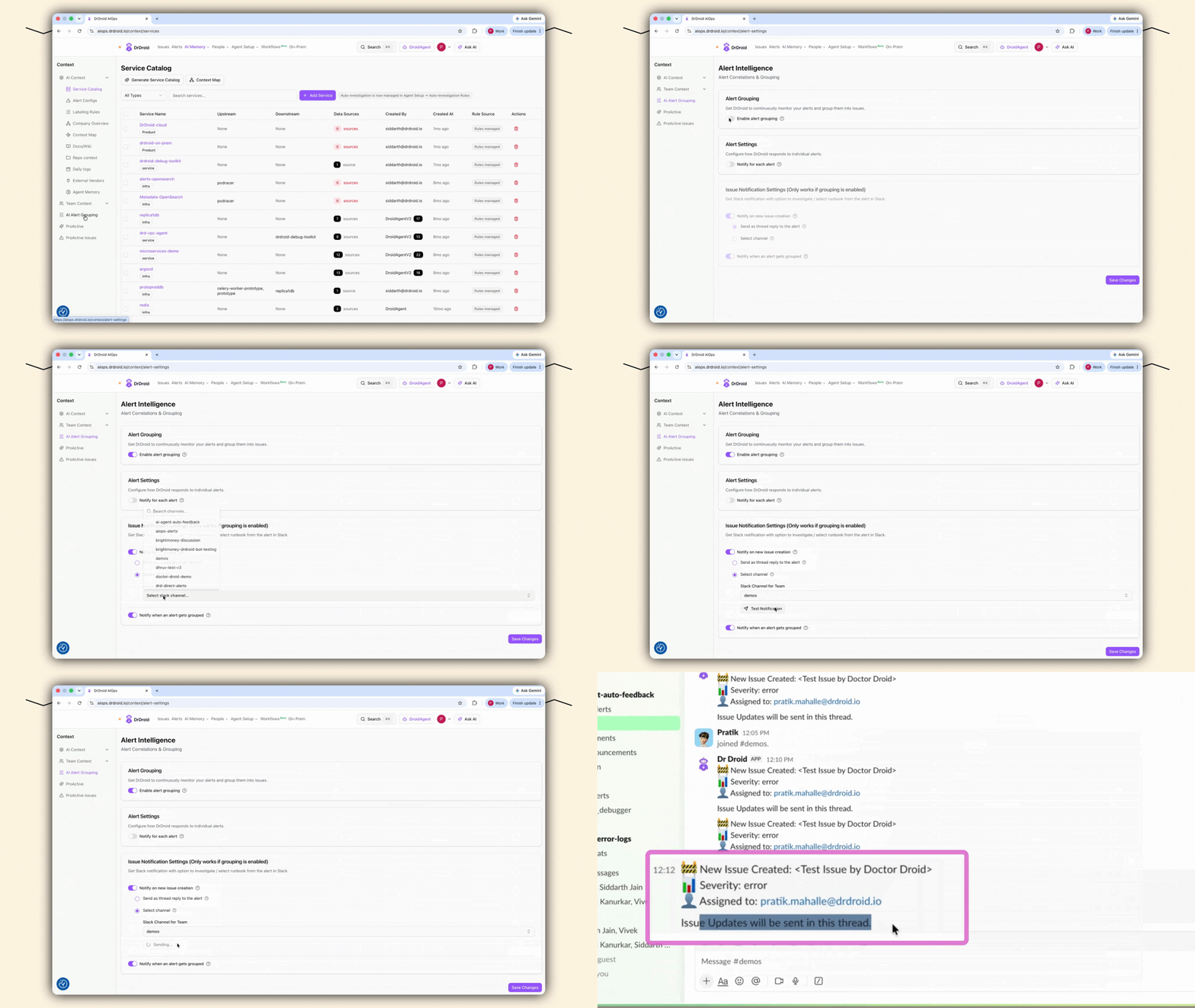
- Turn on grouping with a single toggle, no rollout required
- Get a Slack notification the moment a new issue is created or an alert gets grouped into one
- Route notifications to a team's channel, or reply in the original alert's thread
- Test the notification before you trust it in production
Retire the pager. Keep the signal.
- A human acks every alert before anything happens
- The same incident pages three teams at once
- Critical issues buried under known noise
- On-call scrolls a firehose to find what's theirs
- Alerts are triaged and grouped before anyone's paged
- One root cause becomes one issue, one owner
- Redundant and informational noise suppressed
- Each group routed to the team that owns it
Ready to retire the pager?
Stop acking alerts by hand. Send them to DrDroid. It triages, groups and routes, so the right team sees the right issue without a human in the loop.